Some may feel fatigue, shortly after treatment, while others only feel it after a few sessions of radiotherapy. You can resume your daily activities if you do not feel tired and your doctor has given you the clearance to do so.
Fast, Precise, & Effective
Radiotherapy Treatment
State-of-the-art Halcyon Radiotherapy 4.0 and TrueBeam 4.1 Radiotherapy are your ally in the fight against cancer.
Why Radiotherapy?
Radiotherapy is a non-invasive, highly effective cancer treatment. It uses high-energy particles or waves to target and shrink cancer cells. It is important for many cancer treatment plans and offers various benefits:

Shrink Cancer
Highly effective to cure or shrink early-stage cancer with minimal side-effect.

Stop Cancer Recurring
To stop cancer from recurring or treat symptoms caused by advanced cancer.

Improve Effectiveness
Elevate effectiveness by combining with chemotherapy (chemoradiation) or preparing for surgery (neo-adjuvant radiotherapy).

Reduce Pain
Radiotherapy can alleviate pain, reduce tumor size, and improve your overall quality of life.

Halcyon™ 4.0 Radiotherapy
Beacon Hospital is the 1st Southeast Asia hospital to introduce Varian Halcyon™ 2.0 radiotherapy machine to its cancer patients. It can be used to treat head & neck, lung, breast, prostate, cervix and other forms of cancer.
The Halcyon™ system offers faster, more efficient treatment with a streamlined 9-step workflow, allowing some sessions to be completed in as short as one minute.
With the latest upgrade to Halcyon™ 4.0, Beacon Hospital delivers even more precise treatment and cancer care.
This technology also meets the highest safety standards, having received FDA 510(k) clearance from the United States Food and Drug Administration in June 2017, providing added reassurance to our patients. Find out more
TrueBeam® 4.1 Radiotherapy
Beacon Hospital installed the Varian TrueBeam® 2.7 radiotherapy system in September 2019, the advanced radiotherapy technology from Varian Medical Systems.
With the newly upgraded version to TrueBeam® 4.1, this new generation of linear accelerator can deliver much faster and accurate radiation dose compared to conventional radiotherapy system. TrueBeam® 4.1 rotates around the patient to deliver specifically targeted beams of radiation with pinpoint accuracy. TrueBeam® 4.1 can be used to treat a diverse range of cancers, including tumours of the lung, breast, head and neck, abdomen, liver, and other regions. Find out more

Redefining Treatment Planning with Eclipse v18.1
Improved Imaging Calibration
Supports up to 20 calibration protocols per imaging device, enabling automated selection based on image type and energy for safer, more efficient advanced imaging.
Smarter Plan Checker Features
Tailor treatment plans with improved multi-workspace integration and better documentation tools for streamlined reviews.
New Level of Precision with ELM
Enhanced Leaf Modelling (ELM) provides a new level of precision in dose calculations for radiation therapy, particularly for small field sizes and dynamic MLC sequences. More accurate treatment delivery to the patients
How Eclipse Treatment Planning is done?
The SBRT Normal Tissue Objective (NTO) improves the precision of radiotherapy by intelligently guiding dose distribution to minimize exposure to surrounding healthy tissues while maintaining optimal tumor coverage.
By automatically shaping and refining dose gradients, SBRT NTO reduces the complexity of treatment planning, enabling clinicians to generate consistent, high-quality plans with greater efficiency and confidence.
This empowers radiation oncology teams to achieve better clinical outcomes with streamlined workflows and reduced planning variability.
Best Oncology Team in Private Setting

Your Personalised Treatment
Our experienced oncologists will create radiotherapy prescriptions for your personalised treatment plan depending on factors such as:
Type and size of cancer
Location of cancer
The general health of patients, etc.
Types of radiotherapy
Discover Beacon Hospital’s Latest Health Screening & Treatment Offers
Explore Beacon Hospital’s latest range of wellness packages and medical treatments, thoughtfully designed to support your health journey.
Key Enhancements with Halcyon™ 4.0

The system now includes improved imaging energy features, with automatic imaging energy estimation for better image quality to ensure accurate treatment delivery.

The treatment range has been extended, allowing for longer treatment areas.
Key Features

Fast
Beam-on time could be as fast as 1 minute plus*. (*depends on types of tumour )

Accurate
The unique design of dual-layer multi–leaf collimator (MLC) enables accurate delivery of the radiation dose to the tumour.

Reduces unwanted radiation dose
The reduction in interleaf leakage helps to reduce unwanted radiation dose to critical structures, thus, minimising side effects.

Alleviates anxiety
A quick and quiet treatment helps to reduce anxiety in patient.

Maximises comfort
A spacious 100cm diameter bore with integrated ambient lighting puts claustrophobic patient at ease. Couch descends low to the ground for easy loading and unloading of the patient.

Improved safety
The integrated couch-mounted camera travels with the patient, enabling the radiographer to clearly monitor the patient during the treatment.
Key Enhancements with TrueBeam® 4.1
The system now includes new components and settings for Cone Beam CT (CBCT), particularly for abdominal imaging
Image quality has significantly improved, offering clearer visuals and easier image interpretation for enhanced treatment accuracy
TrueBeam® 4.1 radiotherapy technology improves on previous radiotherapy systems in the following ways:
Fast
Treatments that once took 10 to 30 minutes can now be completed in several minutes. With fast treatment, there is less chance of tumour and patient movement.

Real-time Tracking
The advanced architecture integrates imaging, real-time tracking, respiratory gating, and treatment delivery. This makes the delivery of treatments quickly and accurately while monitoring and adjusting for tumour movement. This is to ensure that radiation is delivered only when the tumour is in the right place.
Precise Treatment
Advanced real-time imaging technique enables clinicians to monitor the tumour they treat in 3D & 4D, and target tumours with submillimetre accuracy. These images will be used to fine-tune a patient’s position prior to and during the treatment process. It can rotate around the patient to deliver a prescribed radiation dose from nearly any angle.
Reduces Unwanted Radiation Dose
Its precision is measured in increments of less than a millimetre. The system performs accuracy checks every 10 milliseconds. This helps the radiation oncologist to deliver radiation beam precisely to tumours. Thus, avoiding critical organs and healthy tissue surrounding the tumour and minimising side effects. The system generates images 60 percent faster than older technology, an enhancement that allows the reduction of X-ray dose to the patient by 25 percent.
Improves Safety and Comfort
Laser Guard II is an integrated patient and equipment collision detection system. The system uses and infra-red laser scanning device that continuously monitors the contoured region between the collimator face and the patient. If an object enters the protection zone, the Laser Guard II stops or inhibits motions prior to a potential collision. This is particularly useful when performing remote gantry or couch rotation. The patient can feel more comfortable and relax, listen to their favourite music while being treated.
TrueBeam® 4.1 can provide multiple treatment options
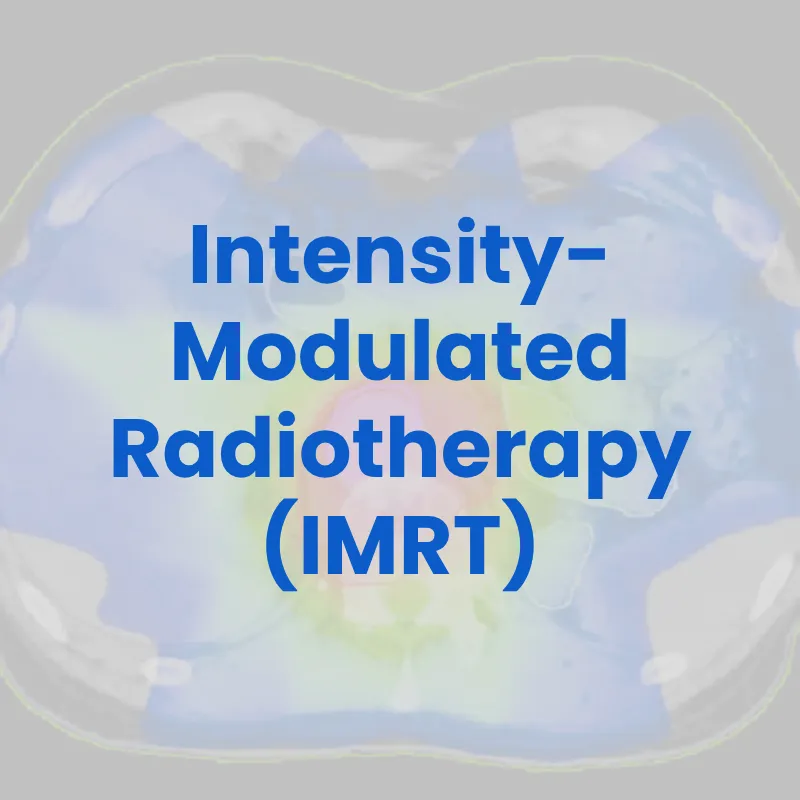
Intensity-Modulated Radiotherapy (IMRT) uses linear accelerators to safely deliver precise radiation to a tumour while minimising the dose to surrounding normal tissue.
RapidArc® Radiotherapy Technology is an advanced form of Intensity Modulated Radiotherapy (IMRT) that delivers a precisely sculpted 3D dose distribution with a 360-degree rotation of the gantry in a single or multi-arc treatment.
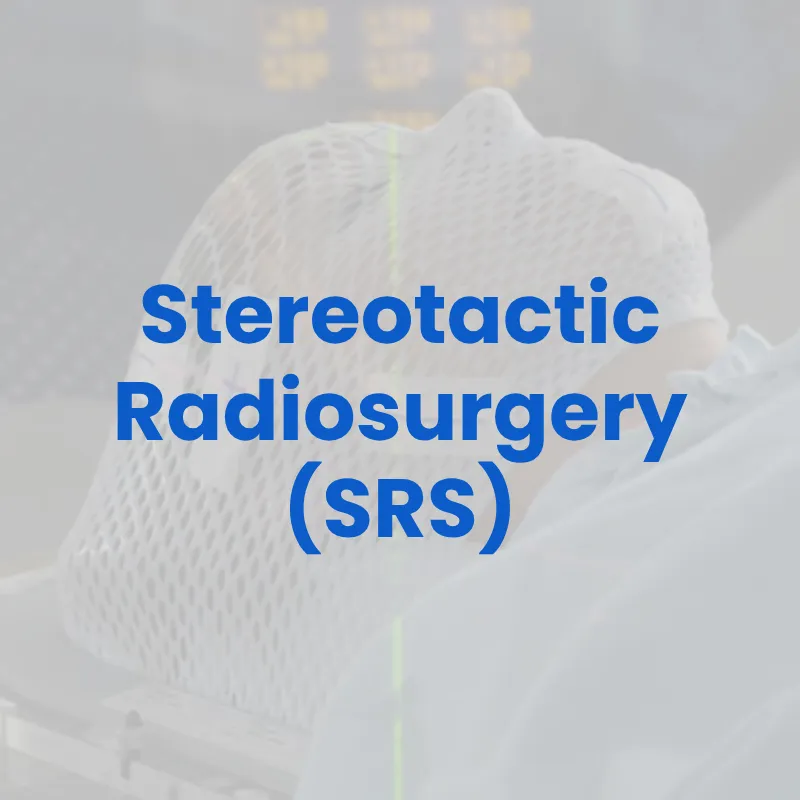
Stereotactic radiosurgery (SRS) is a non-surgical radiation therapy used to treat functional abnormalities and small tumours of the brain. It can deliver precisely-targeted radiation in fewer high-dose treatments than traditional therapy, which can help preserve healthy tissue.

Stereotactic radiotherapy (SBRT / SRT) gives radiotherapy from many different angles around the body. The beams meet at the tumour; this means the tumour receives a high dose of radiation and the tissues around it receive a much lower dose. This lowers the risk of side effects. Stereotactic radiotherapy (SBRT/SRT) is mainly used to treat smaller size tumour in lung, liver, lymph nodes, spinal cord, and brain.
Image-Guided Radiotherapy (IGRT) is the use of imaging during radiation therapy to improve the precision and accuracy of treatment delivery. It is used to treat tumours in areas of the body that move, such as the lungs. Radiation therapy machines are equipped with imaging technology to allow the doctor to image the tumour before and during treatment. By comparing these images to the reference images taken during simulation, the patient’s position is realigned, so the radiation beams are adjusted to be more precise targeting the tumour.
HyperArc™ high-definition radiotherapy represents a significant step forward for high-quality Linac-based radiosurgery, with an easy delivery of non-coplanar stereotactic radiosurgery (SRS) treatments. HyperArc™ could irradiate multiple tumours at the same time without repositioning the patient, which provides better management of patient motions while saving time for the patient and the clinical team. HyperArc™ ensures the planners achieve extremely compact dose distributions consistently and efficiently while maintaining patient safety.
Side Effects Of Radiation Therapy
The side effects of radiotherapy depend on the location of the treated area, the dosage of radiation, duration of treatment, patient’s general medical conditions and other treatments given at the same time.
Side effects are divided by
Early (acute)
Late (chronic)
side effects
Predictable
Expected
Acute side effects are caused by damage to the rapidly dividing normal cells at the area being treated. These include:
- Skin irritation
- Hair loss
- Urinary problems
- Mouth and throat ulcers
- Damage to the salivary gland
Chronic side effects occur months to years after treatment and are often localized to the treatment site, examples of chronic side effects are
- Fibrosis (scarring of tissues)
- Cognitive decline
- Infertility
- Damage to the bowel (radiation enteropathy)
- Secondary cancer
Frequently Asked Questions
Introduced in 2017, Varian Halcyon is the latest radiotherapy machine which delivers treatment fast, accurately and is built with patient comfort and safety in mind. For example, a 2 partial arc RapidArc lung treatment session can be completed in approximately 2 minutes (imaging – 15 seconds and treatment – 1 minute 30 seconds). The dual-layer multi-leaf collimator comes with a stacked and staggered design, with interleaf leakage of 0.01%, which means the risk of unnecessary radiation to healthy tissue nearby is low.
Your radiation oncologist will advise on exactly how many treatment sessions you need for your condition. Typically, radiotherapy is given once a day, five times a week for 5-7 weeks and takes a few minutes in the machine each day of treatment.
The side effects vary depending on the body area being treated with radiotherapy. Common side effects you may experience include fatigue, nausea, and skin changes. Your consultant will elaborate more on these and other side effects that you might experience
TrueBeam® is an advanced radiation therapy system that delivers concentrated beams of radiation to tumours in the body. Each TrueBeam® 4.1 treatment consists of a beam of radiation (or collection of beams) generated by a linear accelerator from inside the TrueBeam® 4.1 system.
TrueBeam® allows pinpoint positioning and CT imaging through advanced imaging technology. The treatment beam can be targeted to a tumour from multiple angles to strike the target in a complete three-dimensional way. The goal is to deliver the lowest possible dose to the surrounding healthy tissue, while still releasing the maximum dose to the tumour.
This version of TrueBeam® offers the latest patented technology by Varian known as HyperArc® – High-Definition Radiotherapy, able to offer high-quality linac based radiosurgery treatment.
HyperArc® could irradiate multiple tumours at the same time without repositioning the patient, which provides better management of patient motions while saving time for the patient and the clinical team.
The delivery of a patient’s treatment varies depending on the diagnosis and the site of treatment. Your attending physician will be able to give the detail information on the course of your treatment protocol. Generally, radiotherapy treatment is given 5 times a week and the total length of treatment will be according to your prescribed treatment protocol.
Due to its accuracy, the TrueBeam® 4.1 system can be used to treat majority forms of tumours, including those located in sensitive areas. For example, lung, liver, lymph nodes, spinal cord, breast, head, neck, abdomen and brain.
Radiotherapy, although not painful, can cause uncomfortable side effects. However, with the advancement of the TrueBeam® 4.1 system, these side effects can be minimised. Talk to your doctor about what to expect from your treatment and find out more about your treatment protocol.


Comprehensive Cancer Care at Beacon Hospital
Beacon Hospital is a leading cancer specialist hospital in Petaling Jaya, Malaysia, dedicated to providing end-to-end cancer care from early detection to advanced diagnostics and personalised treatment.
Our multidisciplinary team, comprising experienced oncologists, radiologists, surgeons, cancer nurses, dietitians, and physiotherapists, works collaboratively to develop tailored treatment plans that address each patient’s unique condition.
With a strong focus on compassionate support, innovation, and recovery, we are committed to walking alongside you and your loved ones throughout your entire cancer journey.
Our multidisciplinary team, comprising experienced oncologists, radiologists, surgeons, cancer nurses, dietitians, and physiotherapists, works collaboratively to develop tailored treatment plans that address each patient’s unique condition.
With a strong focus on compassionate support, innovation, and recovery, we are committed to walking alongside you and your loved ones throughout your entire cancer journey.
Awards & Recognitions


Need Financial Assistance? CSR Programme is Available!

- Open to Malaysian citizens only.
- Patients who are seeking radiotherapy and/or radiosurgery treatment are applicable for this program.
- Patients who are of low income group, financially challenged, exhausted their finances or have insufficient medical insurance coverage.
- Patients are required to consult oncologist as an outpatient (consultation charges apply) in Beacon Hospital.
- Once the treatment plan is established, the attending oncologist will then refer the case to Beacon’s CSR office for financial assessment and eligibility.
- It will take approximately 1 – 2 days to process the application.
- Once the application is approved, the patient will be provided with a guarantee letter, which will enable the patient to get the treatment done at the agreed subsidized cost.
- This program is open to Malaysian citizens only.
- This program is applicable to low income patients who are seeking radiotherapy and/or radiosurgery.
- Applicants are required to fill up application form and submit with supporting documents to CSR department for assessment and approval.
- Beacon Hospital Sdn Bhd reserves the rights to amend the terms & conditions anytime without prior notice.

Hear from Our Patients
Insurance Panels


Book Your Appointment Today
Submit your contact details at the form below or direct click to WhatsApp Us

BEACON HOSPITAL SDN. BHD.
200301019556 (621976-D)
1, Jalan 215, Seksyen 51,
Off Jalan Templer,
46050 Petaling Jaya, Selangor
1, Jalan 215, Seksyen 51,
Off Jalan Templer,
46050 Petaling Jaya, Selangor