
osteoporosis
,
a term that literally means “porous bones”.
This notorious condition is famous for weakening bones,
making them fragile, and increases the chances of bone fracture.
But did you know that there is a lesser known condition,
similar to osteoporosis, known as osteopenia?
Same same but different.
You could say that osteopenia is essentially a warning sign
of osteoporosis, where you start to lose,
or already lost, calcium out of your bones.
Although it is not as significant as osteoporosis,
it is still a condition that should be taken into account
as it can get worse over time.
What is Osteopenia?
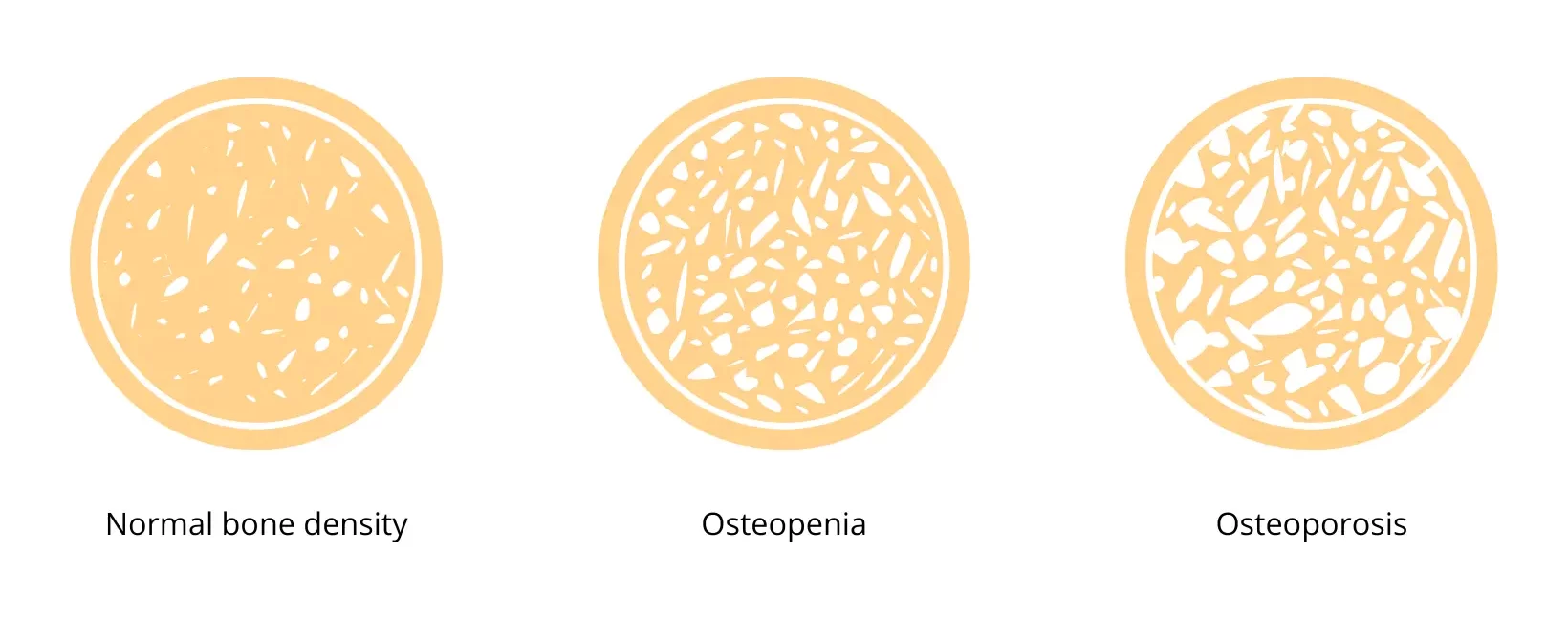
In simple terms, osteopenia is the halfway point
between healthy bones and osteoporosis.
Osteopenia is when your bone density is low,
but not low enough for it to be considered osteoporosis.
Although it is not as severe as osteoporosis,
your bones are still weaker than normal,
meaning that they are still susceptible to sudden
and unsuspected fractures.
If no medical attention is given to your
bone health
,
osteopenia can develop into osteoporosis.
Causes and Risk Factors of Osteopenia
Age
Similar to osteoporosis, the main cause of osteopenia
is something that we have no control over, which is age.
As we age, our body breaks down bones faster than it is able
to grow new ones. Lost in bone density results in our bones
becoming more porous.
Having family history of condition
Other than age, other risk factors of osteopenia include
having a family history of low bone mineral density (BMD).
This is the measurement of how much bone mineral is in your bones.
Women
Women are also more likely to be diagnosed with this condition
due to having a lower bone mass than men.
Adding that to the fact that women live longer than men,
women’s bones age more, increasing their chances of being
diagnosed with osteopenia.
Lifestyle choices
Some lifestyle choices that contribute to osteopenia includes:
- Lack of exercise, particularly weight bearing exercise.
- Lack of calcium and vitamin D in diet.
- Smoking.
- Excessive alcohol consumption.
Symptoms and Diagnosis
Although osteopenia is a lesser version of osteoporosis,
there are no general symptoms of this condition.
This makes it difficult to diagnose without taking a
bone densitometry test
.
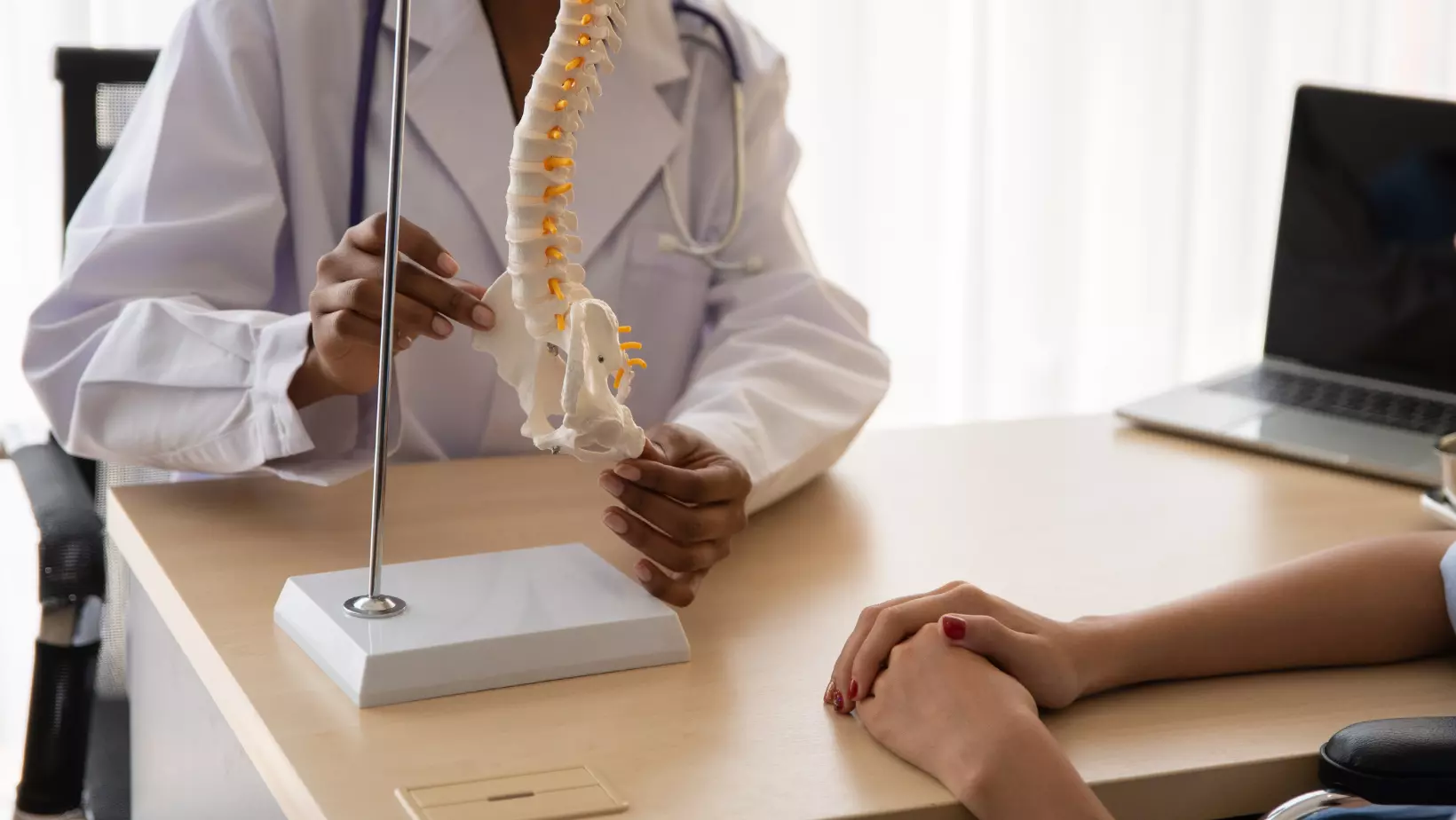
A bone densitometry, or DXA scan, is a quick and non-invasive
screening test, using a low dose of radiation to estimate
the amount of bone mineral density in the bones.
Osteopenia can lead to osteoporosis if necessary steps are not taken.
Beacon Hospital is the only private hospital in Malaysia to implement
Fracture Liaison Service (FLS) Programme
.
Our team of
orthopaedic specialist
are ready to assist you, from screening to treatments
to advising the changes that need to be done
to improve your bone health.