


The medical community has long acknowledged that metabolic diseases rarely progress in isolation. Yet an uncomfortable truth remains: despite remarkable advances in technology and modern medicine—from electric vehicles to the world’s tallest skyscrapers—preventable chronic diseases continue to rise at an alarming rate.
Diabesity, a term describing the intertwined epidemics of diabetes and obesity, represents far more than the coexistence of two common conditions. Together, they have the potential to evolve into a systemic disease state that affects virtually every organ in the body.


The consequences extend well beyond elevated blood glucose. Diabesity damages the cardiovascular, nervous, endocrine, and musculoskeletal systems, while also affecting the kidneys, liver, eyes, and blood vessels. In many ways, it resembles other interconnected metabolic disorders, such as cardiovascular-kidney-metabolic (CKM) syndrome and the metabolic syndrome, both of which highlight the complex interplay between the heart, kidneys, liver, muscles, and other vital organs. Dysfunction in one organ often accelerates damage in another, creating a vicious cycle that becomes increasingly difficult to reverse.
Closer to home, Malaysia continues to face critically high rates of both obesity and diabetes, consistently ranking among the countries with the highest prevalence worldwide.
According to the Institute for Public Health, approximately 15.6% of Malaysian adults—an estimated 3.55 million people—are living with diabetes. This figure does not include the many individuals with undiagnosed diabetes or prediabetes, nor does it fully capture the growing number of young adults aged 18 to 29 years who are developing early-onset type 2 diabetes.
The trend is deeply concerning. The saying “getting sick before getting old” has never been more relevant. Increasingly, individuals in their twenties and thirties are developing chronic metabolic diseases that were once considered illnesses of later life.
Diabetes should no longer be viewed simply as a disorder of blood glucose regulation. It is a systemic disease that creates a persistent, low-grade pro-inflammatory state throughout the body. This chronic inflammation damages tissues over time and lays the foundation for multiple complications.
When accompanied by other metabolic risk factors—including elevated triglycerides, low HDL cholesterol, hypertension, central obesity, and hyperglycaemia—the risk of cardiovascular disease, kidney disease, and further progression of type 2 diabetes increases substantially.
Diabesity is therefore more than the sum of obesity and diabetes. It is a syndemic—two interrelated diseases that interact synergistically, each worsening the other and amplifying their combined impact on health.

A useful analogy is that of a two-headed serpent from mythology: each head nourishes the other, making the creature stronger and more destructive. Likewise, obesity drives diabetes, while diabetes perpetuates obesity-related metabolic dysfunction. Together, they create a self-sustaining cycle of inflammation and organ damage that can affect nearly every system in the human body.
Recognising diabesity as a unified disease process rather than two separate conditions is essential. Only then can prevention, early intervention, and comprehensive treatment strategies effectively address one of the greatest public health challenges of our time.
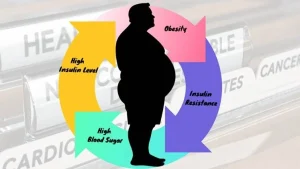
Diabesity creates a self-reinforcing loop where obesity and type 2 diabetes feed off each other. It often begins with excess body fat, especially around the abdomen. Over time, this fat triggers insulin resistance, meaning the body’s cells stop responding effectively to insulin. In response, the pancreas tries to compensate by producing more insulin, but this can only go on so long. Eventually, the body can’t keep up, and blood glucose levels rise, leading to type 2 diabetes. Once diabetes sets in, losing weight becomes even harder due to increased hunger, hormonal shifts, and a greater tendency to store fat. In short, obesity raises the risk of diabetes, while diabetes, in turn, exacerbates obesity—trapping individuals in a destructive, self-perpetuating loop.
All nooks and corners of our body are intricately vascularised to supply oxygen and nutrients. High blood glucose (hyperglycaemia) will be reflected in the tiniest capillaries all over the body. Hyperglycaemia acts as a slow-burning fuse inside the cardiovascular system. When glucose levels remain consistently high, the excess glucose forces endothelial cells (the delicate, single-layer lining of our blood vessels) to process more glucose than they can safely handle. This cellular overload will in turn trigger off a chain of cellular and biochemical reactions called vascular inflammation resulting in epithelial lining damage and blood flow obstructions. This initial microvascular damage will progressively lead to major blood vessel disease. Since all the major organs in the body depend on efficient blood supply, such disruption will lead to complications. Hence, prevention of Diabesity is crucial to hinder cardiovascular complications.

Diabesity: Is There a Way Out?
The answer is YES. You can break the vicious cycle of diabesity. But it’s gonna take more than just “eating less” or “moving more.”
Diabesity is systemically intertwined — obesity and type 2 diabetes keep feeding off each other, but here’s the good news: even losing a little bit of weight can make a real difference. Successful weight control can result in better insulin sensitivity and regulation of blood sugar.
So how do you actually break the cycle? It usually takes a mix of efforts:
The sooner you tackle it, the better your chances of turning things around and avoiding long-term problems.
Look, diabesity can feel like a trap. But with the right help, it’s a trap you can absolutely get out of.