紧急热线: +603 7620 7979 / +603 7787 2992
beacon hospital logo

Endobronchial Ultrasound (EBUS)

Home / 服务 / Endobronchial Ultrasound (EBUS)

Endobronchial Ultrasound (EBUS)

Advanced Minimally Invasive Diagnosis for Lung and Thoracic Diseases
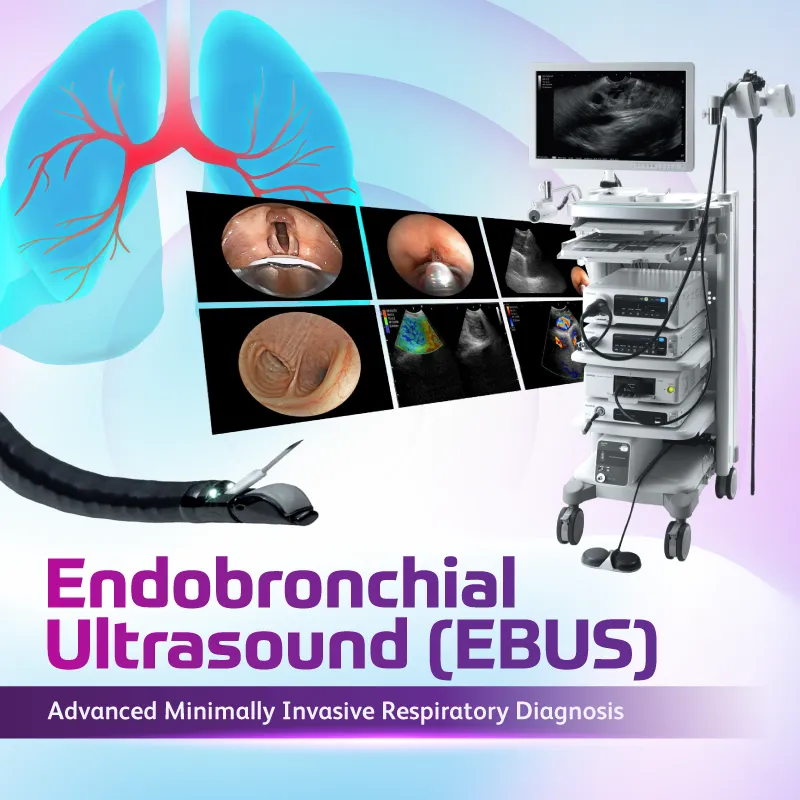
Endobronchial Ultrasound (EBUS) is an advanced diagnostic procedure that combines bronchoscopy with ultrasound imaging to examine the lungs, airways, and surrounding structures within the chest.
This minimally invasive technology allows doctors to obtain real-time ultrasound images from inside the airways, enabling them to detect abnormalities, check lymph nodes and perform targeted biopsies with high precision.
EBUS plays an important role in the early detection, diagnosis, and staging of lung cancer, as well as in the evaluation of other respiratory and thoracic conditions.

What is Endobronchial Ultrasound (EBUS)?

During an EBUS procedure, a thin and flexible bronchoscope equipped with a miniature ultrasound probe is inserted through the mouth or nose into the airways.
The ultrasound probe produces high-resolution images of structures beyond the airway walls, allowing doctors to examine areas that cannot be seen with conventional bronchoscopy alone.
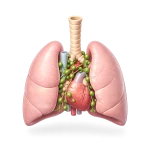
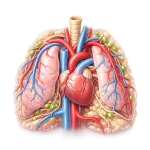
EBUS enables detailed evaluation of important thoracic structures, including:
Lungs
Trachea and bronchi (airways)
Mediastinum (the area between the lungs)
Mediastinal lymph nodes
Nearby blood vessels and tissues
By visualising these structures in real time, doctors can identify abnormalities and collect tissue samples safely and accurately.

Why EBUS is Important in Lung Cancer Diagnosis

EBUS has become an essential tool in modern thoracic and respiratory medicine, particularly for patients suspected of having lung cancer
One of its key roles is lung cancer staging, which determines whether cancer has spread to nearby lymph nodes in the chest. Accurate staging is critical for deciding the most appropriate treatment approach, especially in early stage lung cancer where curative surgery is a treatment option.
With real-time ultrasound guidance, EBUS allows doctors to perform Transbronchial Needle Aspiration (TBNA), a technique where a fine needle is used to collect tissue samples to obtain tissue samples from suspicious lymph nodes or lung lesions without the need for surgical procedures.
This improves diagnostic accuracy while reducing the risks and recovery time associated with more invasive techniques.

Types of EBUS

There are two main types of EBUS used depending on the location of the lung abnormality.
Linear EBUS
Linear EBUS is commonly used to examine and sample mediastinal lymph nodes and central lung lesions. It allows doctors to perform real-time needle biopsies and is widely used for lung cancer diagnosis and staging.
Radial EBUS
Radial EBUS uses a miniature rotating ultrasound probe to evaluate peripheral lung lesions, including small lung nodules located deeper within the lungs. This technique helps doctors access areas that are difficult to reach with standard bronchoscopy.

Benefits of Endobronchial Ultrasound (EBUS)

EBUS offers several advantages compared to conventional diagnostic methods.

Minimally Invasive

The procedure is typically performed under local anaesthesia with sedation, without the need for major surgery.

Supports Early Detection of Lung Disease

EBUS can detect small lung nodules or lymph node abnormalities that may not be visible with standard imaging or bronchoscopy.

Accurate Lung Cancer Staging

It enables doctors to determine whether lung cancer has spread to nearby lymph nodes, which is essential for treatment planning.

Precise Guided Biopsy

Using real-time ultrasound imaging, doctors can obtain targeted tissue samples from difficult-to-reach areas safely.

Lower Risk of Complications

Compared to surgical biopsies, EBUS has a lower risk of bleeding and pneumothorax.

Faster Recovery

Patients usually recover quickly and may be discharged within 1–2 days if stable

Conditions That Can Be Diagnosed with EBUS

EBUS can help diagnose and evaluate a wide range of lung and thoracic conditions, including:
  • Lung cancer
  • Enlarged mediastinal lymph nodes
  • Pulmonary nodules or masses
  • Lung infections
  • Inflammatory lung diseases
  • Other thoracic abnormalities
Early and accurate diagnosis allows doctors to plan timely and appropriate treatment for better patient outcomes.

What Happens During an EBUS Procedure?

1

Preparation

Patients are required to fast for at least 8 hours before the procedure.

2

Sedation

Intravenous sedation or local anaesthesia is administered while vital signs are monitored.

3

Bronchoscope Insertion

A specialised ultrasound bronchoscope is gently inserted through the mouth or nose into the airways.

4

Ultrasound Imaging

The ultrasound probe provides real-time images of the lungs, lymph nodes, and surrounding structures.

5

Tissue Sampling (TBNA)

A fine needle is passed through the bronchoscope to obtain tissue samples from suspicious areas. The collected samples are prepared for immediate examination to ensure sufficient tissue is obtained for further diagnostic evaluation. This process also helps improve the accuracy of the procedure by ensuring the correct tissue is obtained for further analysis.

6

Recovery

After the procedure, patients are monitored until the sedation wears off. Patients should arrange for someone to accompany them home, as drowsiness may persist for a few hours.

Frequently Asked Questions (FAQ)

Most patients receive sedation, so discomfort is minimal. A mild sore throat or cough may occur after the procedure.

The procedure typically takes 30 to 60 minutes, depending on the areas examined and whether biopsies are performed.

EBUS is generally safe with a low complication rate. Minor risks may include bleeding, infection, mediastinitis or reactions to sedation.

Preliminary findings may be discussed shortly after the procedure, while biopsy results are usually available within a few days.

Many patients can go home on the same day or within 1–2 days, depending on their condition.

Our Specialists

Dr-Goh-Kee-San

Dr Goh Kee San

Consultant Respiratory Medicine & Internal Medicine Physician

Dr Wan Jen Lye

Consultant Respiratory Medicine & Internal Medicine Physician

Schedule a consultation to discuss your condition and whether EBUS is suitable for you.

Our Specialists

Dr-Goh-Kee-San

Dr Goh Kee San

Consultant Respiratory Medicine & Internal Medicine Physician
Bahasa Melayu, Cantonese, English, Hokkien, Mandarin

Dr Wan Jen Lye

Consultant Respiratory Medicine & Internal Medicine Physician
Bahasa Melayu, Cantonese, English, Mandarin
Dr-Goh-Kee-San

Dr Goh Kee San

呼吸内科与内科专科医生

华语, 广东语, 英语, 闽南语, 马来语

View

Schedule An Appointment Today

More Contact Information

Email:

Whatsapp:

Office Hours:

Monday – Friday
8:30 AM – 6:00 PM

Chat with our Medical Enquiry Team.

start-chat-whatsapp-button-beacon-hospital-malaysia

信息

Beacon Hospital Sdn. Bhd.

200301019556 (621976-D)
1, Jalan 215, Seksyen 51,
Off Jalan Templer,
46050 Petaling Jaya, Selangor.

订阅我们的新闻通讯

随时了解寶康医院最新的医疗趋势、专家建议和最新活动。

订阅我们的新闻通讯

随时了解寶康医院最新的医疗趋势、专家建议和最新活动。
© 2026 Beacon Hospital (寶康医院). SDN. BHD. 200301019556 (621976-D) | (KKLIU 0573/2028)