


When most people think of lung cancer, they immediately associate it with smoking. However, this widespread assumption masks a crucial reality: lung cancer is not exclusively a smoker’s disease. Up to 50% of lung cancer patients are actually non-smokers.
According to the Malaysia National Cancer Registry Report 2017–2021, lung cancer is the third most common cancer in Malaysia—ranking second in men and third among women. Alarmingly, 95.4% of cases are detected at advanced stages (Stage III or IV), when treatment becomes more challenging. This highlights a critical issue: the lack of early detection, as symptoms often appear only in later stages.
While smoking remains the leading risk factor—especially among men, where nearly 40% of adult males are smokers (GATS 2023)—the trend is very different for women and non-smokers. Despite the fact that Malaysian women smoke, lung cancer is still the third most common cancer among women (Malaysia National Cancer Registry Report 2017–2021).
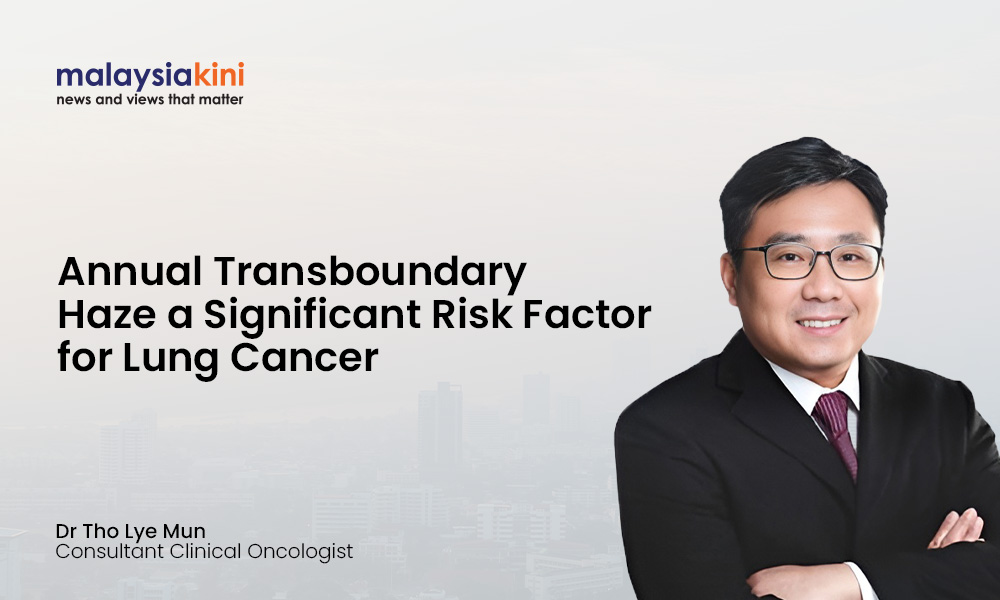
Dr. Tho Lye Mun, a distinguished clinical oncologist and President of Lung Cancer Network Malaysia (LCNM), brings valuable expertise to this discussion. Dr. Tho has been at the forefront of innovative lung cancer treatment approaches, including immunotherapy and targeted therapies.
Let us address some prevalent misconceptions about lung cancer:
While smoking is the leading cause, it’s not the only one. Numerous other factors can contribute to lung cancer development. The disease can affect anyone, regardless of their smoking history.
Not true. Lung cancer affects both men and women significantly. In fact, it’s one of the leading causes of cancer death among women, even surpassing breast cancer in some regions. What’s more, non-smoking women are at higher risk than non-smoking men.
Modern screening tools like low-dose CT scans (LDCT), lung cancer can now be detected at earlier, more treatable stages. There are also AI-enabled chest X-rays that can spot small lung nodules that might otherwise be missed.
Screening plays an important part in the early detection of cancer.
Several significant risk factors contribute to lung cancer in non-smokers:
Wok frying in enclosed, poorly ventilated spaces can release harmful fumes, which increase lung cancer risk, especially with frequent exposure or consumption of wok-fried foods.
Additionally, the burning of wood, coal, or biomass for cooking can produce toxic smoke that significantly increases lung cancer risk.
Air Pollution: Both indoor and outdoor air pollution, including exhaust fumes/industrial emissions and smoke from burning materials like wood or coal, can increase the risk of lung cancer.
Second-hand Smoke: Even without smoking, regular exposure to environmental tobacco smoke remains a significant risk factor.
Workplace Exposure: Certain occupational hazards – such as exposure to asbestos or industrial chemicals – can contribute to lung cancer development over time.
Some non-smoking lung cancers are driven by genetic mutations, which are found more often in women, especially of Asian descent.
Some of these mutations can be detected through testing and treated with targeted therapies, offering better outcomes and more personalised treatment options.
The treatment landscape for lung cancer has evolved significantly. Dr. Tho shares targeted therapies and immunotherapy have opened new avenues for treatment, though their effectiveness varies between smoking-related and non-smoking-related lung cancers.
While we can’t control all risk factors, there are steps we can take to reduce lung cancer risk:
As we observe World Lung Cancer Day, it’s crucial to remember that lung cancer can affect anyone. The disease doesn’t discriminate based on smoking history, age, or gender. Understanding this reality is the first step toward better prevention, earlier detection, and more effective treatment strategies.
This World Lung Cancer Day serves as a reminder of the importance of raising awareness about all aspects of lung cancer. By breaking down myths and understanding the various risk factors, we can work toward better outcomes for all individuals affected by this disease.
[Note: This blog article was written in observance of World Lung Cancer Day, featuring insights from Dr. Tho Lye Mun and the latest research in lung cancer.]