EN
EN 中文
中文 IDN
IDN






Lung cancer remains one of the most serious global health challenges, accounting for approximately 1.8 million cancer-related deaths worldwide each year. In Malaysia, it is the third most common cancer, representing an estimated 10% of all cancer cases. With persistently high smoking rates, the incidence of lung cancer is expected to rise further over the next decade, underscoring the urgent need for deeper insights into disease management and prognosis.
Despite advances in cancer care, lung cancer survival rates remain alarmingly low. In Malaysia, the 1-year and 5-year survival rates stand at approximately 35.5% and 11% respectively—among the lowest across cancer types. These outcomes are influenced by a combination of factors, including patient demographics, cancer stage at diagnosis, tumour histology, and molecular characteristics.
Recent developments in cancer treatment, however, have brought renewed hope. Personalized treatment—commonly referred to as targeted therapy—has emerged as a promising approach to improving patient outcomes. By using biomarkers identified through molecular profiling, clinicians are able to tailor treatment strategies to the individual characteristics of each patient. This precision-based approach has been shown to improve treatment effectiveness, quality of life, and overall well-being among lung cancer patients.
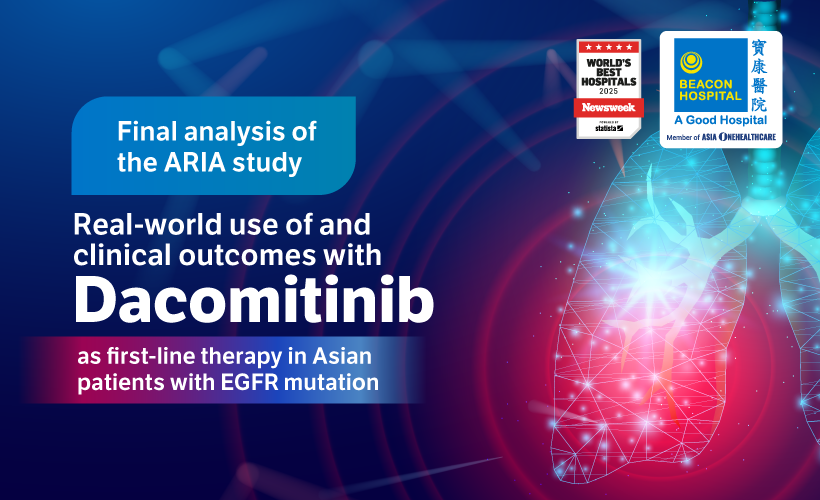
To address existing gaps in local data, Beacon Hospital conducted a comprehensive study examining lung cancer survival rates and predictive factors in Malaysia. The study analysed clinical characteristics, treatment strategies, and molecular profiles of lung cancer patients treated at Beacon Hospital in Selangor. A particular focus was placed on patients with epidermal growth factor receptor (EGFR) mutations, evaluating their overall survival outcomes over a five-year period.
The findings provide valuable real-world insights into lung cancer care in Malaysia. Notably, the study highlights encouraging survival outcomes among patients with EGFR-mutated non-small cell lung cancer (NSCLC) treated with second- and third-generation EGFR tyrosine kinase inhibitors (TKIs). These results reinforce the critical role of molecular profiling in guiding treatment decisions and optimising patient outcomes.
In addition to contributing to the growing body of evidence on the effectiveness of first-line anti-EGFR therapies, the study identifies important clinical data gaps that warrant further investigation. The researchers emphasise that these findings can serve as a foundation for future multicentre, prospective studies, which may help inform treatment strategies, clinical guidelines, and healthcare policy decisions in lung cancer care.
As lung cancer continues to pose a significant healthcare burden in Malaysia, studies like this underscore the importance of personalised medicine and data-driven approaches in improving survival outcomes and shaping the future of cancer treatment.