
| Timelines | Activities |
|---|---|
|
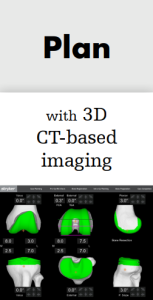
1. Plan - Personalised Surgical Planning Your journey begins with a personalised surgical plan. A CT scan is taken to create a 3D virtual model of your knee, allowing your surgeon to accurately assess:
Using this detailed model, your surgeon determines the ideal implant size, placement, and alignment to suit your anatomy, ensuring better accuracy and long-term function. |
|
2. Assess - Real-Time Accuracy This means your surgeon can make real-time adjustments to ensure your new joint moves smoothly and naturally. |
|
3. Balance - Bone Removal With Greater Precision |
|
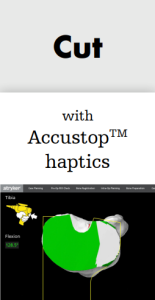
4. Cut - Insert Implant Finally, your surgeon places the implant, guided by the robotic-arm according to the pre-planned 3D model, ensuring precision and alignment.This results in:
|
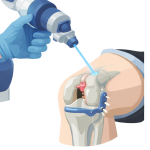

Our orthopaedic specialist will assess your condition and advise if robotic-arm assisted surgery is right for you.
Yes, robotic-arm assisted TKR surgery is generally considered safe. Its advanced robotic precision helps reduce the risk of complications, but, as with any surgery, some risks remain. It is important to discuss these with your surgeon to ensure you fully understand your procedure.
No, the orthopaedic surgeon will be doing the surgery. The robotic arm is to enhance accuracy and safety.
There will be a 3D CT-based imaging before the surgery.
Coverage depends on your insurance provider and policy. Our team can assist with your insurance queries.
Your surgeon will evaluate your condition and medical history before determining if you are suitable for this procedure.
Recovery times can vary between patients, but many notice significant improvement within a few weeks. Most are able to resume daily activities within 4 to 6 weeks, and in some cases, patients may even go home on the same day as their surgery.
Consultant Orthopaedic & Arthroplasty Surgeon
Bahasa Melayu, Cantonese, English, Hakka, Hokkien, Mandarin, Teochew
Consultant Orthopaedic Surgeon (Orthopaedic-Oncology & Reconstructive Surgery)
Bahasa Melayu, Cantonese, English, Hokkien, Mandarin
Book An Appointment
Complete the form below and our team will get in touch with you as soon as possible.
Contact Information
For appointment enquiries, general information, or assistance, you may contact us through the details below.
Prefer to speak with us directly? Start a Whatsapp chat with our team.
Start Chat