Most hip fracture patients are unable to regain their ability to live independently and experience a significant reduction in their quality of life. In addition, individuals who suffer a fragility fracture are at substantially increased risk of suffering second and subsequent fractures.
Approximately half of the patients who suffer a hip fracture had previously broken another bone – a ‘signal’ fracture – before breaking their hip5. It is therefore recommended that after a fragility fracture, patients should be assessed and treated for osteoporosis in order to reduce the risk of second and subsequent fractures, particularly of the hip6.
Prevention
Prevention of secondary or subsequent fractures has been recognized as an important strategy in osteoporosis management.
Among the preventive measures for osteoporosis are:
Medications that stop bone loss
Medications that increase bone formation and bone strength
Lifestyle changes, including quitting cigarette smoking, curtailing excessive alcohol intake, exercising regularly, and consuming a balanced diet with adequate calcium and vitamin D
However, the awareness of post-fracture intervention among the community is generally poor. In most cases, the fracture is treated as an acute event by the orthopedic surgeon or emergency physician who provides the best of immediate care for the fracture. The patients also treat their fracture as an acute event as they are unaware of their bone fragility.
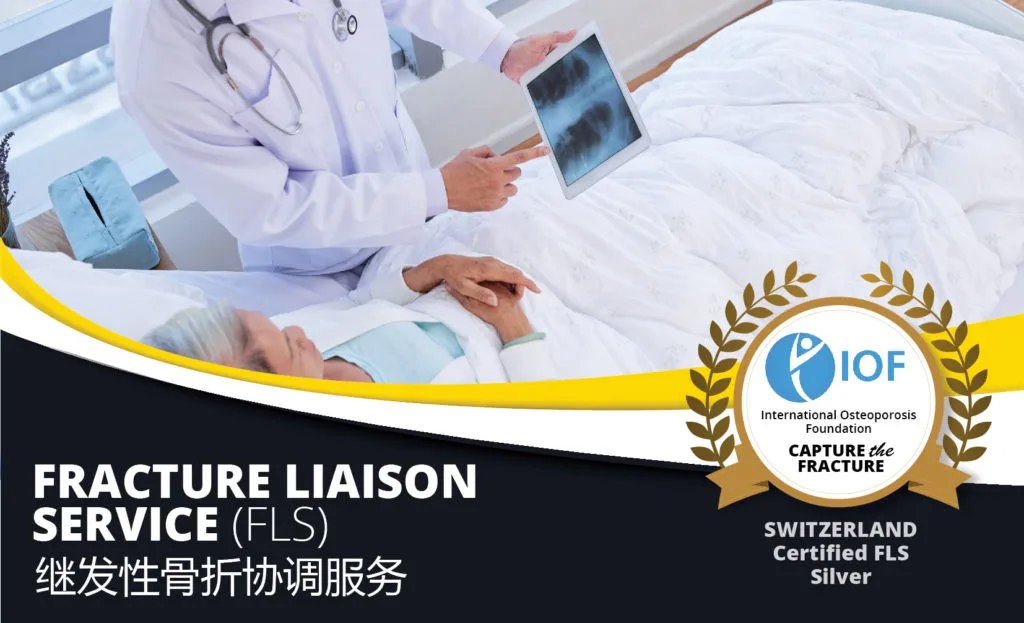
Recognizing the importance of providing secondary preventive care to the post-fracture patients, Beacon Hospital takes pride to be the only hospital in Malaysia to implement Fracture Liaison Service (FLS) programme.
Under the FLS programme, a bone evaluation is performed and a personalized plan is developed for an individual to maintain his or her bone health and to prevent future fractures. It has been recognized as a crucial programme worldwide to prevent subsequent fractures and thus, result in significant medical cost savings.