EMERGENCY LINE: +603 7620 7979 / +603 7787 2992
beacon hospital logo

Coughing Out Blood (Haemoptysis)

Home / Symptoms / Coughing Out Blood (Haemoptysis)

What is Haemoptysis?

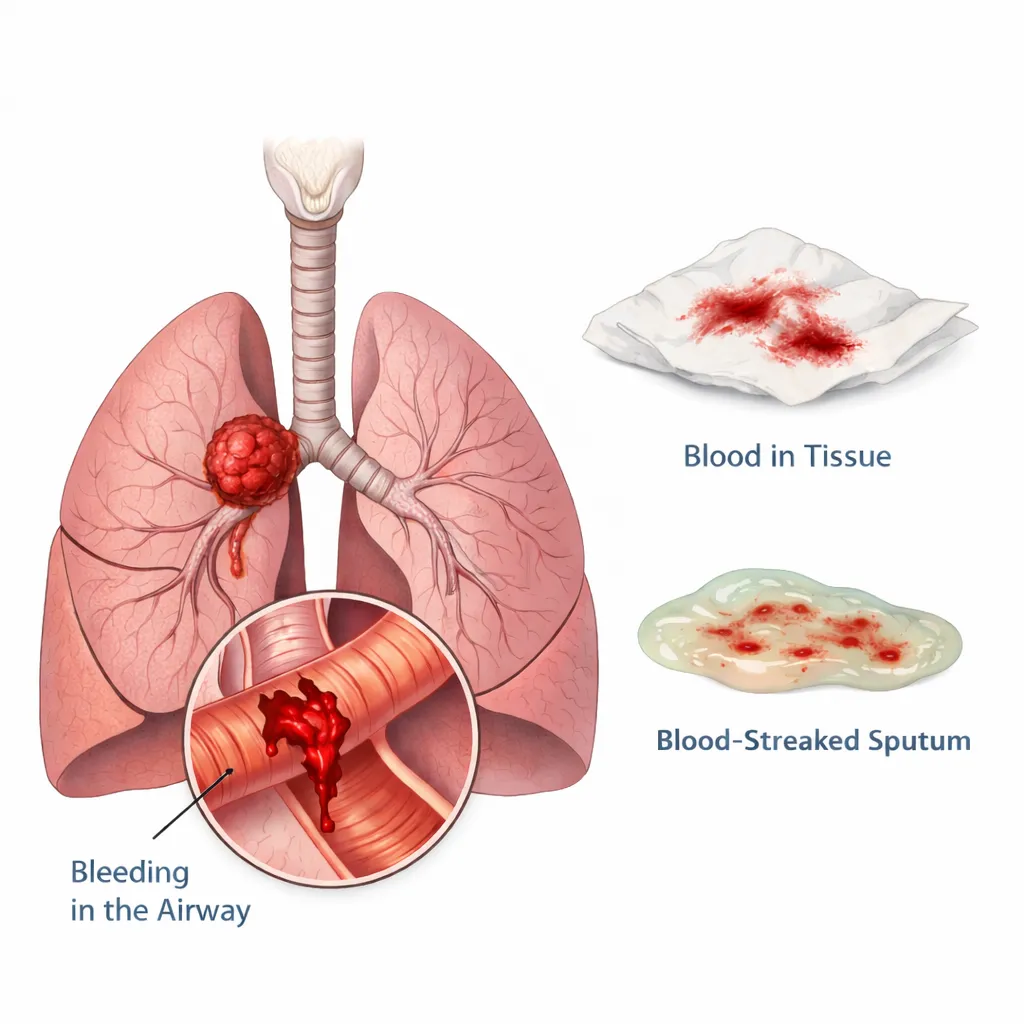
Haemoptysis refers to the expectoration of blood originating from the lower respiratory tract. It may present as blood-streaked sputum, rust-coloured mucus, or frank bright red blood.

It can occur in the setting of respiratory infections, chronic lung disease, structural airway abnormalities, or, in some cases, lung cancer. The severity ranges from minimal streaking to massive haemoptysis, which constitutes a medical emergency.

Even small-volume haemoptysis warrants evaluation, particularly in individuals with risk factors such as long-term smoking, occupational exposure, or prior lung disease.

While haemoptysis may be caused by minor and treatable conditions such as infection, it can also indicate more serious underlying lung pathology. The clinical context, associated symptoms, and individual risk profile are important factors in determining the significance of the bleeding.

Pathophysiology

In most cases, haemoptysis arises from the bronchial circulation, which is a high-pressure system supplying the airways.

Mechanisms include:

• Inflammation or infection of the bronchial mucosa
• Structural airway damage
• Erosion into bronchial blood vessels
• Neoplastic involvement of airway tissue

In lung cancer, bleeding may occur due to tumour necrosis, invasion into adjacent vasculature, or friable tumour surfaces within the bronchial tree.

Clinical Causes

Haemoptysis is associated with a wide spectrum of respiratory conditions.

Infective Causes

Respiratory tract infections, including acute bronchitis, pneumonia, and tuberculosis, are common causes. Chronic infections may predispose to recurrent bleeding.

Structural Lung Disease

Bronchiectasis and chronic obstructive pulmonary disease (COPD) may lead to recurrent or intermittent haemoptysis due to chronic airway inflammation.

Vascular Causes

Pulmonary embolism and certain autoimmune vasculitides may present with haemoptysis.

Lung Cancer

Haemoptysis is a recognised presenting symptom of lung cancer, particularly in centrally located tumours involving major bronchi. It may be accompanied by persistent cough, unexplained weight loss, chest discomfort, or breathlessness.
However, haemoptysis alone does not confirm malignancy. Diagnostic evaluation is required to determine the underlying aetiology.

Clinical Assessment

Prompt medical assessment is advised if haemoptysis occurs alongside:

• Persistent cough lasting more than two to three weeks
• Unexplained weight loss
• Progressive breathlessness
• Chest pain
• Recurrent episodes of bleeding
• Significant smoking history
• Age above 40 with new-onset respiratory symptoms

Massive haemoptysis, defined as large-volume bleeding or bleeding causing airway compromise, requires immediate emergency care.

Assessment of haemoptysis typically involves:

  • Comprehensive clinical history and examination
  • Chest radiography as an initial investigation
  • Contrast-enhanced CT scan of the thorax for detailed anatomical assessment
  • Sputum cytology or microbiological analysis where indicated
  • Bronchoscopy for direct visualisation and localisation of bleeding source

In patients with risk factors for lung cancer, imaging plays a critical role in identifying suspicious pulmonary nodules, masses, or endobronchial lesions.

Early evaluation improves diagnostic accuracy and enables timely management.

Anybody can get lung cancer but most lung cancers are caused by:

  • Smoking (90%) – active and second-hand smoke

Tobacco smoke contains more than 4,000 chemical substances, most of which have been identified to cause lung cancer. According to research, smoking 20 cigarettes per day increases the risk of lung cancer by 20-25 times compared to non-smokers. Vaping also consists of many detrimental chemical substances that can be linked to cancer.

Other causes of lung cancer include:

  • Chronic obstructive pulmonary disease
  • Air pollution from vehicles and factories
  • Having lung diseases such as tuberculosis
  • Exposure to asbestos and other carcinogens
  • Occupational exposure to arsenic, chromium, nickel, aromatic hydrocarbon, ether etc.

Haemoptysis and Lung Cancer Screening

Individuals with a significant smoking history or occupational exposure to carcinogens may benefit from medical evaluation if haemoptysis occurs.

Low-dose CT screening may be considered in appropriate high-risk groups based on clinical assessment and prevailing screening guidelines.

Persistent or unexplained haemoptysis should never be attributed solely to smoking without appropriate investigation.

When to Seek Specialist Care

Referral to a respiratory physician or thoracic oncology specialist may be indicated when:

The cause of haemoptysis remains unclear
Imaging reveals suspicious lung lesions
Bleeding is recurrent
There are additional systemic symptoms

Early specialist assessment facilitates accurate diagnosis and multidisciplinary management when required.

Clinical Perspective

While haemoptysis may arise from benign and treatable conditions, it remains an important symptom in the evaluation of lung cancer. Careful clinical assessment ensures appropriate investigation without unnecessary delay.

If You Are Experiencing Haemoptysis

Patients experiencing coughing out blood or persistent respiratory symptoms are advised to seek medical evaluation.

Timely assessment allows identification of infection, chronic lung disease, or, where present, early-stage lung cancer.

Book a consultation with a respiratory or oncology specialist for further evaluation.

Find Related Consultants

Explore our team of specialized consultants at Beacon Hospital, dedicated to providing expert care and treatment across various medical fields.
DR MOHAMED IBRAHIM A WAHID, Beacon Hospital, Oncologist Specialist, Medical Director

Dato’ Dr Mohamed Ibrahim A Wahid

Consultant Clinical Oncologist

Bahasa Indonesia, Bahasa Melayu, English

View

Dr Azura Rozila Ahmad - Consultant Oncologist - Beacon Hospital

Dr Azura Rozila Ahmad

Consultant Medical Oncologist

Bahasa Indonesia, Bahasa Melayu, English

View

Dr Jasmin Loh Pei Yuin

Consultant Radiation Oncologist

Bahasa Melayu, English, Mandarin

View

Dr Junie Khoo Yu-Yen

Consultant Clinical Oncologist

Bahasa Melayu, Cantonese, English, Hokkien, Mandarin

View

Dr Kua Voon Fong, Consultant Clinical Oncologist, Oncology, Beacon Hospital

Dr Kua Voon Fong

Consultant Clinical Oncologist

Bahasa Melayu, Cantonese, English, Mandarin

View

Dr Lum Wan Wei

Consultant Clinical Oncologist

Bahasa Indonesia, Bahasa Melayu, Cantonese, English, Mandarin

View

Dr Ng Boon Huat

Consultant Clinical Oncologist

Bahasa Indonesia, Bahasa Melayu, Cantonese, English, Mandarin

View

Dr Tho Lye Mun

Consultant Clinical Oncologist

Bahasa Indonesia, Bahasa Melayu, Cantonese, English

View

Dr Vincent Phua Chee Ee

Consultant Clinical Oncologist

Bahasa Melayu, English, Hokkien, Mandarin

View

Dr A.B. Manivannan

Consultant Clinical Oncologist

Bahasa Melayu, English, Tamil

View

Latest Promotion

Explore our latest promotions on medical treatments and wellness packages designed to support your health and well-being at Beacon Hospital.

Information

Visiting Hours:
10:00 – 22:00
General Line:
+603 7620 7979 +603 7787 2992
Consultants Appointment Line:
+603 7118 7878 +6012 328 6913
Email:
info@beaconhospital.com.my
Career Enquiries / HR:
joinus@beaconhospital.com.my

Beacon Hospital Sdn. Bhd.

200301019556 (621976-D)
1, Jalan 215, Seksyen 51,
Off Jalan Templer,
46050 Petaling Jaya, Selangor.

Subscribe to Our Newsletter

Stay up-to-date with the latest healthcare trends, expert advice and latest events at Beacon Hospital.

Subscribe to Our Newsletter

Stay up-to-date with the latest healthcare trends, expert advice and latest events at Beacon Hospital.
© 2026 Beacon Hospital (寶康医院). SDN. BHD. 200301019556 (621976-D) | (KKLIU 0573/2028)