



At a glance, partnerships between people and robots suggest that technology could automate certain tasks and functions. However, the human body is fundamentally heterogeneous—a complex integration of tissues, organs, bones, and blood vessels. This physical and biological variability makes surgical care unlikely to be fully automatable. Instead, robotic technology in medicine functions not as a replacement, but as a sophisticated enhancer, bridging human clinical judgment with machine-level precision. It is within this collaborative relationship that the future of surgery is being thoughtfully reshaped.

As technology advances rapidly, robotics has become firmly embedded in modern medicine and surgery, transforming how procedures are planned and performed. Contrary to concerns about redundancy, the role of medical professionals is expanding in scope and specialisation. In orthopaedics, robotic systems augment surgical practice by improving accuracy and efficiency, allowing surgeons to focus on complex decision-making, patient-centred care, and long-term outcomes. In this evolving model, technology supports—rather than supplants—clinical expertise, ensuring that human oversight and empathy remain central to the healing process.
While surgical skill and experience remain essential, specific operative tasks such as bone extraction and implant placement can be executed through robotic arm assistance under the surgeon’s control. By integrating the latest bone scanning technology, surgeons gain enhanced preoperative insight and intraoperative feedback, enabling precise removal of damaged bones while protecting surrounding structures
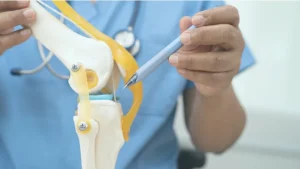
The Robotic-Arm Assisted TKR further supports surgeons by providing real-time data throughout the procedure, maintaining situational awareness and enabling continuous assessment. This allows for immediate intraoperative adjustments when required. Such procedural fluidity ensures that implants are aligned accurately with the patient’s native anatomy, enhancing stability, durability, and functional outcomes. Through this targeted and controlled approach, patient experience is improved, postoperative discomfort is reduced, recovery is accelerated, and long-term satisfaction is increased.

Ultimately, collaboration between surgeons and robotic systems expands the range of options available to patients requiring surgery. This advancement does not represent a departure from traditional surgical values, but a refinement of them—augmenting human skill with advanced technology to deliver care that is both precise and profoundly human. It is this synergy that holds the greatest promise, improving not only how surgery is performed, but how patients heal, recover, and return to their lives.